SUTRA....

WORLDWIDE OEM, STOKIST & WHOLESALER WANTED !


SUTRA membawa maksud penyatuan antara tubuh dan jiwa dengan menggunakan aromaterapi. Kami menciptakan ketenangan dengan produk yang seimbang untuk keperluan anda, sesuai untuk gaya hidup yang sihat dan moden. Produk-produk kami dirumuskan khas menggunakan hanya 100% minyak yang tulen, memberikan aromaterapi yang bermanfaat untuk minda, tubuh dan semangat anda.

Selasa, 9 Jun 2009

TROPICAL BIOESSENCE SDN BHD COMPANY PROFILE


INTRODUCTION

Tropical Bioessence Sdn. Bhd. (TBESB) began as Research-Develoment-
Commercial operation in March 2005 at Melaka Institute of Biotechnology. We
have grown steadily for over a year become a major supplier extracts in the
booming natural products industry, aromatherapy especially. Currently we are
the major supplier in Malaysia for essential oil, essential oil-based products and
also herbal extracts. This outstanding performance throughout the years reflects
our close harmony with both industry trends and the values of natural products
consumers.

TBESB has demonstrated a strong business growth. The business was originally
structured as a producer of essential oil and herbal extracts to end user.
However with the great demand of natural product especially in aromatherapy
products, TBESB now has several distributor and marketer in order to fulfill the
demand.

The most sustained and dramatic success with product expansion has been in
the area of aromatherapy. Early in history, TBESB accommodate its customer by
buying bulk quantity of essential oils, blending and rebottling them in 10ml and
100ml bottles. This line grew steadily as the concept and practice of
aromatherapy became increasingly popular in Malaysia. In an effort to meet as
many customer requests as possible, TBESB expanded its nature of business, as
a manufacturer of essential oils and few lines of essential oil-base products with
added many uncommon herbs and spices oil.

To realize the vision, in June 2006, with the assist of Majlis Amanah Rakyat
(MARA) TBESB has rent 5,300 sq. ft factory to build commercial essential oil and
herbal extract plants. As a result, TBESB started their full commercial scale
extraction by January 2007.

Company’s Vision
To be an international leadership in production, value adding and marketing of
essential oil, herbal and medicinal plant extracts.

Company’s mission

1. To produce standard quality essential oil, herbal and medicinal products
suitable for both local and international market.

2. To promote awareness and understanding of markets on essential oil, herbal
and medicinal products to end-user as multi purpose home usage.

3. Improving continues effort on R&D in order to foster efficient industry
development on essential oils and herbal extracts.

4. Encouraging the development of new crops and products to take advantage of
market opportunities.

5. Improving yield and quality through technological advances.

TBESB will focus on products that have good market potential. Strategic
alliance with R&D institutions will enable the organization control its
manufacturing efficiency in production by improving extraction process, value
adding, implementing quality assurance and control programs to guarantee
consistency of quality.

We at TBESB believe in giving the best products and services to our customers.

COMPANY PROFILE

a. Name Of Company - Tropical Bioessence Sdn Bhd.

b. Company Registration Number - 683554-V

c. Date of Incorporation - 8 March 2005

d. Registered Address
- Suite 3-2, Aras 3, Menara MITC, Jalan Konvensyen, Kompleks MITC, 75450 Melaka

e. Operation Address - Factory
No. ST 519, Jalan Tunas Baru, Seksyen ¼,
Kawasan Perindustrian Masjid Tanah MIEL,
78300 Masjid Tanah, Melaka

g. Marketing Address
Tropical Bioessence Marketing, No 88 Jalan TU2, Taman Tasik Utama, Hang Tuah Jaya, 75450 Ayer Keroh,
Melaka, Malaysia.
Phone : +606-2324188
Fax : +606-2323887

h. email and homepage of company
email: aromasutra@live.com
Website : www.sutraessential.com

i. Equity Structure:
Authorized Capital : RM100, 000.00
Paid-Up Capital : RM100,000.00

PRODUCTION EQUIPMENT

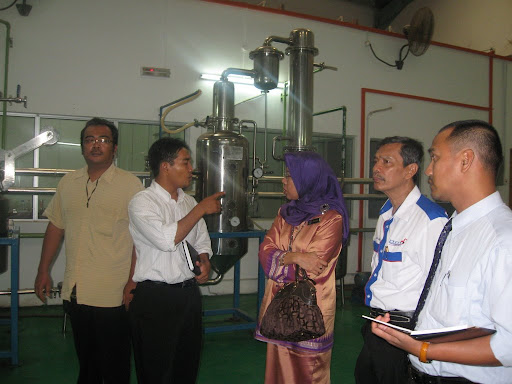
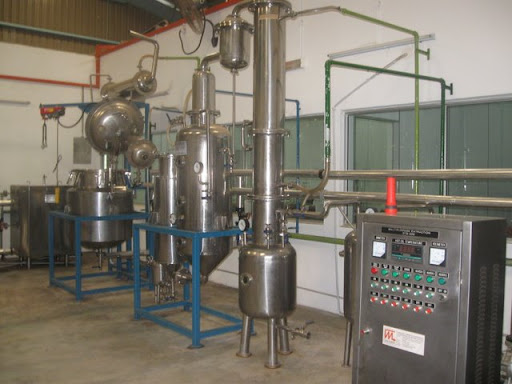
The company has a well equipped manufacturing unit with state-of-the-art
technology. The various unit operations are carried out using mechanized
technology, eliminating human handling operations to a great extent. This
ensures uniformity in production, avoid contamination and affirms reproducibility
and consistency of products from batch to batch.
The production facility contains steam distillation with capacity 200kg per day,
multipurpose extractor, water extractor, spray dryer, oven dryer, milling,
blending and bottling equipment.


CAPACITY
a) Essential oil : 200kg raw material per day with total 300L essential oil per
annum

b) Pure Herbal extracts : i) water based with 300L per day with 1200 kg per
annum

c) Aromatherapy handmade soap : 1000pcs per day

PRODUCTS
Essential Oil Products:
1) Pure Essential Oil
2) Blended Essential Oil
3) Aromatherapy Massage Oil

ESSENTIAL OIL AND HERBAL BASED PRODUCTS
I. Aromatherapy Soap
a. Rectangular shape (100g)
II. Foot and Bath Salts
III. Therapeutic grade massage oils
IV. Aromatherapy Hair & Body Shampoo (250ml)
V. Body & Hand Lotion (tba)
VI. Body Scrub (tba)
VII. Beauty Products (tba)

QUALITY
TBESB Quality Control laboratory is well equipped with modern analytical
instruments such as Gas Chromatography Mass Spectrometry, refractive index
and specific gravity. Our quality management and quality assurance policy
ensures reliability and assures that enquiries and orders are given prime
importance and are dealt wisely in a systematic and timely manner


Raw material supply:
In order to have enough and continuously supply of raw material, TBESB has
done some contract farming with government agencies and individual who are
capable and have strength in financial aspect. Currently we have practiced
INTERGRATION SYSTEM where our contract farmers will growth planting
material which originated from tissue culture techniques. This planting material
will be supplied by Invitro Tech Sdn. Bhd. Our company will buy back the
material from the farmers. Therefore, this system will provide win-win situation
to the plant supplier, farmer and approximately our company. This system will
promise the continuity and reliable supply of raw material.

CONTRACT AND SERVICES
1.1 TBESB also offers contract manufacturing of;
1.1.1 Essential oil
1.1.2 Blended oil
1.1.3 Massage oil
1.1.4 Essential oil-based liquid hand soap
1.1.5 Essential oil-based shower gel and shampoo
1.2 TBESB also offer contract services for ;
1.2.1 Extraction of essential oil
1.2.2 Blending oil and bottling
1.2.3 Extraction of herbal extracts

COLLABORATIONS
1) MELAKA INSTITUTE OF BIOTECHNOLOGY
I. Product's production method and protocol
II. Research and development for product proving evidence
III. Product testing for quality assurance and quality control

Sutra Essential @ sutraessential.blogspot.com

Isnin, 1 Jun 2009

How Essential Oils Work


How Essential Oils Are Produced
From HowStuffWorks.com

There are several different ways to extract essential oils, and all require elaborate equipment. As you will see from the following descriptions, most extraction techniques are based on the fact that the majority of essential oils mix with oils, fats, alcohol, and certain solvents, but not with water. Some methods are more suitable for certain plants than others, depending on the plant's chemical make-up.

Producing essential oils involves complex and elaborate equipment.
Producing essential oils involves
complex and elaborate equipment, and
is beyond the scope of anything
you can do in the home.

Distillation

Most pure essential oils are extracted from plants through steam distillation. Freshly picked plants are suspended over boiling water, and the steam pulls the oils out of the plant. The steam rises, is captured in a vessel, and is pushed along tubing. Then the steam is rapidly cooled, causing it to condense back into water. Since water and essential oils do not mix, the two separate, and the essential oil is collected.

A byproduct of this distillation is the remaining water. Some plants contain aromatic compounds that are so water soluble, they remain in the water that is left over after distillation. Such waters are very fragrant and are prized by aromatherapists, who refer to them as hydrosols. In aromatherapy, hydrosols are used mostly in cosmetics to moisturize skin.

Expression

The most direct method of producing essential oils is pressing them from the plant's flesh, seeds, and skins -- a process similar to that used to obtain olive oil. This technique is used mostly with citrus peels, such as orange, lemon, lime, or grapefruit, because the oil in their peels is easily pressed out.
Enfleurage

This very old method is rarely used today except in France. It is a long and complicated process that has become very expensive. Blossoms are set on sheets of warm fat that absorb the oil from the flowers. Originally animal fat or lard was used, but now vegetable fats are more common. Once the essential oil has been incorporated into the fat, the "exhausted" flowers are removed and replaced with fresh ones. The process is repeated several times until the fat is infused with fragrance. Then the fat is separated out with solvents, leaving just the essential oil.

Solvents

Aromatherapists tend to shy away from oils obtained through chemical solvents, worrying that slight traces of the solvent may remain even though they are supposed to be completely removed. First, the plant is dissolved in a solvent such as benzene, hexane, or chlorure of methylene. The solvent, which has a low boiling point, is then evaporated off, sometimes with the help of a machine that uses vacuum or centrifugal force to help pull it away from the essential oil.

The resulting oils are called "absolutes." A similar method uses paraffin waxes as the solvent, but does not evaporate them off. Instead, the remaining paraffins cause the final product to be solid, and thus it is called "concrete."

Even though the evaporated solvent is recaptured and cooled back into liquid so that it can be reused, this process is still expensive. As a result, it is reserved for costly oils that cannot be distilled, such as jasmine and vanilla, or for rose essential oil, which is slightly less expensive when obtained through this process rather than through distillation.
Carbon Dioxide

New methods of obtaining essential oils are currently being introduced. One of the most interesting processes, although extremely expensive, extracts the oil with carbon dioxide. The delightful result is an essential oil scent that is very close to that of the plant itself.

Depending on the way the essential oil is produced the quality and concentration can be greatly affected.


Essential Oil Quality

Since they are products of nature, the quality of essential oils is affected by growing conditions, the particular species of plant, extraction techniques, and storage, among other factors. Even the type of soil, temperature, and cloud cover affect some oils.

To determine the quality of an essential oil, you'll need to be concerned with three crucial characteristics -- purity, grade, and integrity. The information below and lots of experience will guide you.

Purity

Purity is an important concern to anyone purchasing essential oils. They can be adulterated, cut, or entirely replaced with a cheaper substitute or extended or diluted with vegetable oils, alcohol, or solvents. These substitutes and extenders might not be derived from a plant at all. But even if they are, the oil will not be as potent as it should be, nor will it function as expected. Unfortunately, a label claiming a product is a pure essential oil is no guarantee that it is the real thing. An oil labelled rose or vanilla may have been produced in a laboratory out of synthetic chemicals, but it can still be labeled an essential oil.

Inexpensive oils such as orange, cedar, or peppermint are seldom altered. However, alteration is common with expensive oils that are in great demand, such as rose, melissa, and jasmine.
Dilution with vegetable oil is usually easy to detect. Dilution with alcohol may be a bit more difficult to determine, but these oils do have a slight alcohol odor. Oils adulterated with a clear, non-oily solvent are the most difficult to recognize. This is a potential health hazard as well, since such solvents are readily absorbed into the body when rubbed on the skin or inhaled through the lungs.
Grades

Many essential oils are sold to distributors in different grades. Their prices often reflect this: The better grades command up to double the cost of the lesser grades. For example, lavender is commonly available in at least a dozen different grades and lemon in four. The lesser grades are often still pure essential oil, but they contain less of the most important aromatic principles.

Different processing methods can produce different grades. For example, redistillation produces oil that is stronger in some compounds than others. This is typically done with peppermint oil so the chewing gum and candy it flavors has a lighter, fresher taste and smell.

Once your nose has had a little experience with essential oils, you'll find that higher grades generally are more intense and carry a richer bouquet of fragrance. Lower quality oils usually smell less complicated or weak because they do not contain a full range of aromatic compounds.

When two bottles of the same kind of oil smell differently, it does not necessarily mean that one is better than the other. The best quality oils are similar to fine wine in that even experts don't agree on their favorites. For example, one geranium essential oil might carry a distinctly stronger hint of citrus while another smells more like rose. Which is better? Most people will prefer the rose, but that doesn't make it better.
Integrity

By integrity we mean that the oil is pure and natural and comes from a single species of plant (and probably even from the same region and harvest). An oil with integrity is not whipped up in a laboratory or composed of cheaper essential oils. But inexpensive lemongrass or citronella essential oils sometimes masquerade as the very expensive melissa (lemon balm) oil. To make an artificial rose oil in the laboratory, rose geranium may be used as a starting point, then chemically altered to mimic, although never completely accurately, a rose scent.

The problem here is that although the end product still contains only pure, natural essential oils, it will not have the properties you want and expect. Asking for an oil by its Latin name may help, but it doesn't guarantee that you will get what you want.

How to Buy Essential Oils

At first, it may seem a formidable task to detect the difference between good and poor grades of oil or to spot a synthetic. But you'll be pleasantly surprised at how easy it becomes, after only a little practice, to sniff out good essential oils.

Until your nose knows, you'll have to trust your source. Each essential oil company decides the quality it will offer. Some companies consistently sell the poorer, cheaper grades while others prefer to sell the higher grades. They will rarely offer you, as a retail consumer, a choice in grades. As a result, some lines tend to be more expensive than others. But do not use price alone to judge an oil's quality, since lower grades of oil may be sold for far more than they are worth. Remember, too, that store clerks do not always know much about aromatherapy and may naively think that anything labeled an essential oil comes from the plant named.

Cheaper essential oils may actually end up costing you more money in the end because they are weaker.
©Sutra Essential
Cheaper essential oils may actually end up costing you more
money in the end because they are weaker and you might have
to use more to achieve the same effect.

Sophisticated advertising and fancy packaging may also be misleading. And, because not everyone cares about the healing effects, a few companies have filled the growing demand for scents with the cheapest means at their disposal. The most unscrupulous will sell low quality oils for the price of better ones.

This being said, you will find oils and related supplies at natural food stores, herb stores, specialty mail-order catalogs, and of course, at aromatherapy and skin care outlets. Some stores also have retail sites on the Internet.

Some essential oil mail-order companies are run by aromatherapists who stake their reputation on supplying high quality oils, so they may be the best way for you to get what you want. However, you need to know exactly what you want since you will not have the opportunity to sniff before purchase.

Price

There is great variation in the price of essential oils because some are more expensive to produce. In Bulgaria, schoolgirls labor in the misty morning, picking delicate rose petals just before the hot rays of the sun can release the fragrant oils into the air. Bulgaria produces the world's finest rose oil, but it takes about 600 pounds of petals to make a single ounce of oil! Rose oil also is expensive because the flowers must be carefully cultivated, pruned, and hand-picked.

Jasmine oil is expensive for similar reasons. Producing an ounce of pure jasmine requires 20 days labor for an experienced picker, followed by costly methods of extraction. As a result, rose and jasmine demand top dollar. On the other hand, peppermint is much less costly because the plant contains more essential oil, is relatively easy to grow and tend, and is harvested with machinery. The price of essential oils varies from $5 to an incredible $800 an ounce or more, reflecting the difficulty involved in their production.

Many other factors, such as difficult growing conditions, the rarity of the plant, or where the plant is grown, affect essential oil prices. Essential oils produced in the United States automatically demand a higher price to cover the greater costs of labor.

Surprisingly, cheaper oils will probably end up costing you more in the long run. Lesser quality oils are often weaker than high quality ones, and you will have to use more of them to achieve the same effect as a smaller amount of the high quality oil. Depending on how much more you have to use, you may end up spending more than if you'd simply purchased the better quality oil to begin with.


How to Store Essential Oils

Once you've purchased quality essential oils, you certainly will want to keep them that way. Store them in glass containers. Some essential oils can actually dissolve plastic, and storing them even temporarily in it may contaminate the oil. Don't store essential oils in dropper bottles either, as it doesn't take long for the rubber seals and squeeze bulbs to melt into a gooey mess.

The color of the bottle doesn't really matter. Just be sure to keep all essential oils out of direct sunlight and away from heat so they don't lose their potency.

Essential oils are natural preservatives and will help preserve your carrier oils. Their scent will change and fade over time, however, and eventually lose its quality. Properly stored, most oils will keep for at least several years. The citrus oils, such as orange and lemon, are most vulnerable to losing their smell, but even they will keep for a couple of years if refrigerated.

A few essential oils, including patchouli, clary sage, benzoin, vetiver, and sandalwood, actually help fix the scent of other aromas combined with them. And they get better with age. The same is true for thick resins such as myrrh. Patchouli that has been stored for many years smells so rich, few people recognize it -- even those who otherwise dislike it! Essential oils such as these become yet more valuable with age.


ABOUT THE AUTHOR: Kathi Keville is director of the American Herb Association and editor of the American Herb Association Quarterly newsletter. A writer, photographer, consultant, and teacher specializing in aromatherapy and herbs for over 25 years, she has written several books, including Aromatherapy: The Complete Guide to the Healing Art and Pocket Guide to Aromatherapy, and has written over 150 articles for such magazines as New Age Journal, The Herb Companion, and New Herbal Remedies.

Sutra Essential @ sutraessential.blogspot.com

Jumaat, 29 Mei 2009

AROMATHERAPY THERAPEUTIC MASSAGE TREATMENT EFFECT


Therapeutic effect
From Wikipedia, the free encyclopedia

A therapeutic effect is a consequence of a medical treatment of any kind, the results of which are judged to be desirable and beneficial. This is true whether the result was expected, unexpected, or even an unintended consequence of the treatment. An adverse effect, on the other hand, is a harmful and undesired effect.
What constitutes a therapeutic effect versus a side effect is a matter of both the nature of the situation in which a treatment is used and the goals of treatment. There is no inherent difference between therapeutic and undesired side effects; both responses are behavioral/physiologic changes which occur as a response to the treatment strategy or agent. However, those changes which are viewed as desirable, given the situation, are called therapeutic; those undesirable for the situation are viewed as unfavorable.

For example, it widely promoted that "natural" or "organic" agents are more healthy. However, everything in the world has multiple and varying responses when used; both desirable and undesirable effects are inherent parts of the total response. Even water – on which all life on earth depends – can have undesirable, even fatal effects; while increased intake of water can save a dehydrated patient, too much water can lead to water intoxication, sometimes resulting in death, such as in severe pulmonary edema.
As a simple example, the therapeutic effect of diphenhydramine, when used for nasal congestion, is to lessen mucous membrane secretions and the side effect is drowsiness. However, when used for insomnia, as in many over-the-counter preparations, the therapeutic effect of diphenhydramine is drowsiness and the side effect is mucous membrane dryness, which is undesirable, especially if the person using the agent for sleep is already suffering from dry membranes. The more important issue is not the agent, but the situation in which the therapeutic agent is used; a change in the situation can easily totally reverse what is usually considered a therapeutic versus an undesirable side effect.
Diphenhydramine was originally marketed under the brand name Benadryl in the early 1950s. When taken orally, it typically induces two behavioral responses: (1) drying of mucous membranes, potentially helpful in cases of increased nasal congestion and (2) drowsiness. Diphenhydramine was promoted for reducing nasal congestion, thus response 1 was the considered the therapeutic effect. Since response 2, the drowsiness response, was typically not viewed as desirable, drowsiness was termed a side effect.
When diphenhydramine is used as treatment, these two effects, individual responses, are always bound together and cannot be separated. Even though the dose can be changed and the relative degree of the two responses may be reduced or increased and the degree of the two different responses may be somewhat different at different doses, the two responses cannot be separated. For simplicity of illustration, only two typical responses are mentioned. For completeness, be aware that as with most treatments people usually exhibit additional behavioral responses to diphenhydramine beyond the two mentioned. [1]


For example, it widely promoted that "natural" or "organic" agents are more healthy. However, everything in the world has multiple and varying responses when used; both desirable and undesirable effects are inherent parts of the total response. Even water – on which all life on earth depends – can have undesirable, even fatal effects; while increased intake of water can save a dehydrated patient, too much water can lead to water intoxication, sometimes resulting in death, such as in severe pulmonary edema.
As a simple example, the therapeutic effect of diphenhydramine, when used for nasal congestion, is to lessen mucous membrane secretions and the side effect is drowsiness. However, when used for insomnia, as in many over-the-counter preparations, the therapeutic effect of diphenhydramine is drowsiness and the side effect is mucous membrane dryness, which is undesirable, especially if the person using the agent for sleep is already suffering from dry membranes. The more important issue is not the agent, but the situation in which the therapeutic agent is used; a change in the situation can easily totally reverse what is usually considered a therapeutic versus an undesirable side effect.


Diphenhydramine was originally marketed under the brand name Benadryl in the early 1950s. When taken orally, it typically induces two behavioral responses: (1) drying of mucous membranes, potentially helpful in cases of increased nasal congestion and (2) drowsiness. Diphenhydramine was promoted for reducing nasal congestion, thus response 1 was the considered the therapeutic effect. Since response 2, the drowsiness response, was typically not viewed as desirable, drowsiness was termed a side effect.
When diphenhydramine is used as treatment, these two effects, individual responses, are always bound together and cannot be separated. Even though the dose can be changed and the relative degree of the two responses may be reduced or increased and the degree of the two different responses may be somewhat different at different doses, the two responses cannot be separated. For simplicity of illustration, only two typical responses are mentioned. For completeness, be aware that as with most treatments people usually exhibit additional behavioral responses to diphenhydramine beyond the two mentioned. [1]

The desire to simplify clinical situations and variables is one of the important reasons that physicians often prefer highly refined and regulated prescription drug preparations, as opposed to less refined and regulated products, often marketed as "natural" to imply safety.
Products from nature are essentially always complex mixtures of large numbers of different chemical agents, many only partially understood in term of usual desirable and undesirable responses, relationships of these effects to specific doses and with varying amounts of dose present within any given sample available.
The pharmaceutical industry highly purifies, concentrates and sometimes makes very controlled modifications of agents obtained from natural sources, when there is no alternative source, so as to select out and greatly reduce the variables in the treatment agent offered. Ratios of relative responses, often summarized using the concept therapeutic index, are utilized to help understand and communicate treatment responses.
A pharmaceutical grade agent does not make the patient any more simple but it does greatly simplify, narrow and make more definable and predictable both the usual desirable and undesirable effects of the treatment agent, based on careful tracking of the responses of many individuals who have taken the agent, in widely varying amounts and situations, in the past. This purification can greatly improve the probability for both the patient and the physician that the resulting responses to the treatment are likely to be more predictable and controllable.


Selasa, 26 Mei 2009

Alat penyulingan minyak pati skala sederhana.


Alat penyulingan minyak pati skala sederhana.
 
Sistem penyulingan mengandungi unit tabung bahan, satu unit dandang setelit, satu unit kondenser, satu unit pemisah minyak dan satu unit sistem gentri.  Setiap tabung bahan mempunyai kapasiti 23.4 m3 yang boleh dimasukkan lebih kurang 500 kg daun tea-tree yang baru dituai.  Dandang setelit menjana 120-150 kg/jam wap yang sederhana kering ditekanan atmosfera.  Diesel digunakan sebagai bahan bakar.
 
Wap dimasukkan ke dalam dua tabung bahan menerusi dua paip.  Penyulingan berlaku di dalam dua tabung bahan mengandungi bahan sulingan.  Wap yang mengandungi minyak pati disalurkan kepada kondenser di mana wap dan air akan menjadi cecair dan dikumpulkan di dalam pemisah minyak.  Minyak pati yang diperolehi kemudian dipisahkan dari air.  Tabung bahan, dandang setelit, kondenser dan pemisah minyak adalah diperbuat daripada besi kalis karat gred 304 dengan ketebalan yang tertentu.  Kecekapan sistem ini adalah seperti berikut:
 
1.         Perolehan kembali (recovery) 90% dan jumlah masa ekstraksi adalah lebih baik dari teknik penyulingan basah (60%) untuk tea-tree.
 
2.         Rekabentuk tabung bahan menggunakan ukuran asas (masa asas, ukuran kenaikan paras ketinggian bahan suling dan faktor lag) suatu penyuling ujian terbukti berjaya.
 
3.         Penggunaan wap yang sederhana kering mengurangkan kehilangan minyak melalui “run off” dan kesan “hydrophillic”.
 
4.         Dandang wap menjana wap secukupnya ditekanan atmosfera (120-150 kg/jam) melalui paip-paip condong selari (38 mm jejari) yang terletak di bawah dandang wap, memberikan mekanisma pemanasan yang cepat melalui pusingan air di dalam dandang.  LPG, disel dan minyak tanah sebagai bahan bakar.
 
5.         Wap di dalam tiub kondenser memberi kondensasi yang cekap bagi wap mengandungi minyak pati.
 
6.         Ciri keselamatan tabung bahan mematuhi ASME-Section II (1998).
 
 
Kebaikan alat penyuling adalah seperti berikut:
 
1.         Ia boleh digunakan di ladang tanpa menggaji seorang boilerman kerana ia dijalankan ditekanan atmosfera.
 
2.         Sistem penyulingan boleh dibuat oleh kilang tempatan dan ini menjimatkan tukaran wang asing kerana tidak perlu mengimport sistem penyulingan menggunakan dandang komersial.
 
3.         Bakal pengguna ialah penanam dan pemeroses tanaman minyak pati.

Sutra Essential @ sutraessential.blogspot.com

Isnin, 25 Mei 2009

Sistem Penyulingan Untuk Minyak Pati


Sistem Penyulingan Untuk Minyak Pati
 
NAMA TEKNOLOGI:  Sistem Penyulingan Untuk Minyak Pati
 
Penyelidik-Penyelidik Utama
Ketua Projek:  Ahmad bin Ab. Wahab
Penyelidik-penyelidik bersama:  Abdul Rahman bin Idris,  Mansor bin Puteh
 
Teknologi
Beberapa rekabentuk untuk penyulingan minyak pati seperti tea-tree, serai wangi, serai makan, nilam, kayu manis, lada hitam, pala, akar wangi, allspice, cucur atap, limau purut, limau bali, limau pagar dan lain-lain telah dibangunkan.  Reka bentuk alat penyulingan adalah terbahagi kepada tiga seperti berikut:
 
1.       Alat penyulingan skala kecil
2.       Alat penyuling skala sederhana
3.       Alat penyuling skala besar
 
 
Keterangan ringkas teknologi
a.        Alat penyuling skala kecil menggunakan wap yang lembap di kadar 1.8 – 2.0 kg/jam. Alat penyuling boleh menampung 50-80 kg bahan sulingan bagi satu penyulingan (bergantung jenis tanaman minyak pati).  Suatu “vapour-in-tubes condenser” yang diletakkan menegak diguna. Rekabentuk ini adalah jenis mudah-alih dan sesuai sebagai sistem penyulingan untuk pekebun kecil.
 
b.                 Alat penyuling skala sederhana mengandungi dua unit tabung bahan, satu unit dandang satelit, satu unit “condenser”, satu unit pemisah minyak dan satu unit sistem gentri.  Dandang satelit menghasilkan 120-150 kg/jam wap yang kering ditekanan atmosfera dan menggunakan disel sebagai bahan bakar.  Wap dimasukkan ke dalam dua tabung bahan menggunakan dua hos wap.  Penyulingan berlaku di dalam dua tabung bahan yang mengandungi bahan sulingan dan wap yang terhasil akan disalurkan kepada kondenser di mana wap dan minyak akan bertukar menjadi cecair dan dikumpulkan di dalam pemisah minyak.  Minyak pati kemudian dipisahkan dari air.  Tabung bahan, dandang satelit, kondenser pemisah minyak dibuat dari besi kalis karat 304 dengan ketebalan yang sesuai.  Sistem ini disertakan lengkap dengan bakul-bakul pengisian/pengeluaran bahan suling.
 
c.         Alat penyuling skala besar mengandungi empat unit tabung bahan, satu unit dandang komersil, dua unit kondenser, dua unit pemisah minyak dan satu unit sistem gentri.  Setiap tabung bahan mempunyai isipadu 23.4m3 yang boleh menampung 500 kg bahan suling.  Dandang komersil menjana 200-500 kg/jam wap ditekanan tertentu menggunakan disel sebagai bahan bakar.  Wap dimasukkan ke dalam empat tabung bahan yang mengandungi bahan suling dan wap yang mengandungi air.   Minyak pati disalurkan ke kondenser yang mana wap air dan minyak akan bertukar menjadi cecair dan dikumpulkan di dalam pemisah minyak.  Minyak pati kemudian dipisahkan dari air.  Tabung bahan kondenser, pemisah minyak diperbuat daripada besi kalis karat 304.  Sistem ini disertakan lengkap dengan bakul-bakul pengisian/pengeluaran bahan suling.
 
 
Ulasan am berkaitan dengan pengkomersilan
Penanaman tumbuhan minyak pati patut digalakkan dahulu sebelum mempromosikan teknologi penyulingan ini.  Sementara menunggu kebun tanaman-tanaman ini diadakan, bahan-bahan mentah dari negara jiran boleh diimport dan dipasarkan sebagai produk-produk bernilai tambah melalui “fractionation” dan pembangunan produk.
 
 
Bukti penyelidikan
Penerbitan

1.       Abd. Rahman Azmil, I., Omar, T. and Ahmad, A.W. (2201).  Effect of agronomic practices on the yield and oil quality of kesum (Polygonum minus) J. Trop. Agric. and Food Sc. 29 (1).
 
2.       Ahmad, A.W., Abd. Rahman Azmil, I. and Mohd. Noh. J. (1999).  Production and processing of essential oils (tea-tree, kesum patchouli and vanilla).  Kertas kerja yang dibentangkan di International Conference and Exhibition on Herbs, 9-10 Nov. 1999, The Mines Resort, Serdang, Selangor.
 
3.       Ahmad, A.W., Mansor, P., Abdul Malek, Y. and Jaafar, H. (1998).  Distillation of tea-tree (Melaleuca alternifolia) oil.  I. Establishment of basic parameters and standard conditions for a test distiller and evaluation of two prototype distillers.  J. Trop. Agric. and Food Sc. 26(2): 175-187.
 
4.       Ahmad, A.W., Mansor, P. and Tunku Kassim, T.A.R. (1998).  Distillation of tea-tree (Melaleuca alternifolia) oil.  II.  Comparison of different fuels for steam generation using a prototype distiller.  J. Trop. Agric. and Food Sc. 26 (2): 189-194.
 
5.       Muhamad Ghawas, M. and Ahmad A.W. (2202.  Yield performance and chemical constituents of selected local lines of Ocimum accessions. J. Trop. Agric. and Food Sc. 30(2): 145-150. Puat, N.A., Abdul Rahman Azmil, I., Mansor, P. and Ahmad, A.W. (2002).  Effect of planting density, nitrogen fertilizer and harvesting frequency on the Performance of tea-tree (Melaleuca alternifolia).  Kertas kerja yang dibentangkan di Workshop RMKe-7 Research Project Achievements, RIC Center, MARDI 20-21 August 2002, Sutra Beach Resort Terengganu.

Sutra Essential @ sutraessential.blogspot.com

WE WILL BE AT SMIDEX EXHIBITION 2009, KLCC CONVENTION CENTRE, 3-6 JUNE 2009.


To all that live in KL, Selangor and nearby, those interested to get our SUTRA AROMATHERAPY products, can come visit our booth at SMIDEX EXHIBITION AT KLCC on 3-5 JUNE 2009 because we are offering price discounts for you there. 

We also will tell about the business opportunity by becoming our SUTRA SHOPPE, SUTRA POINT and RAKAN SUTRA at the exhibition. You will have an opportunity to meet our first SUTRA SHOPPE. We will help you to get monetary finance for those that do not have modal.

 
EXHIBITION INFORMATION:

DATE: 3-5 JUNE 2009

DAY: WEDNESDAY-FRIDAY 

VENUE: KUALA LUMPUR CONVENTION (KLCC),KUALA LUMPUR.
 
VISIT OUR BOOTH THERE !!

Sutra Essential @ sutraessential.blogspot.com

Sabtu, 23 Mei 2009

BUSINESS OPPORTUNITY WITH SUTRA ESSENTIAL


WE TROPICAL BIOESSENCE MARKETING WANTS TO INVITE THOSE THAT INTERESTED TO BECOME SUTRA SHOPPE, SUTRA POINT AND RAKAN SUTRA. THE BUSINESS OPPORTUNITY IS VERY WIDE FOR THOSE INTERESTED BECAUSE WE WILL HELP IN TERMS OF PROMOTIONS, ADVICE, TRAINING, AND ALL THE NEEDED. SINCE OUR COMPANY IS ONE OF THE BUMIPUTRA AROMATHERPY PRODUCT MANUFACTURER IN MALAYSIA, WE PROMISED A GREAT INCOME FOR THOSE THAT INTERESTED TO BECOME OUR STOCKIST. CONTACT US FOR FURTHER INFORMATION.

1. SUTRA SHOPPE

Sutra Shoppe is the one that will be become our dealer in every state. SUTRA SHOPPE will supply our products to our SUTRA POINT.

2. SUTRA POINT

Sutra Point is the one that will sell our products in their shop/spa/saloon/boutique. If you have Spa, saloon, boutique, we wants to invite you to join us to become our Sutra Point to sell our products.

3. RAKAN SUTRA RM188

RAKAN SUTRA is people who interest in selling Sutra product as a part time job by using catalog that we provide in this RAKAN SUTRA PACKAGE. After becoming RAKAN SUTRA, you will get:

8 types of Aromatherapy Handmade Soaps
6 types of role on Perfume
Membership card (where it must renew every 1 year)
Product catalog.

INTERESTED? CONTACT US:

MOBILE: 019-7526867(MR RUSDI)
MOBILE: 019-7706867(MR IBRAHIM)
MOBILE: 019-7596867 (MISS NORISHAN)


Sutra Essential @ sutraessential.blogspot.com